
.jpg)
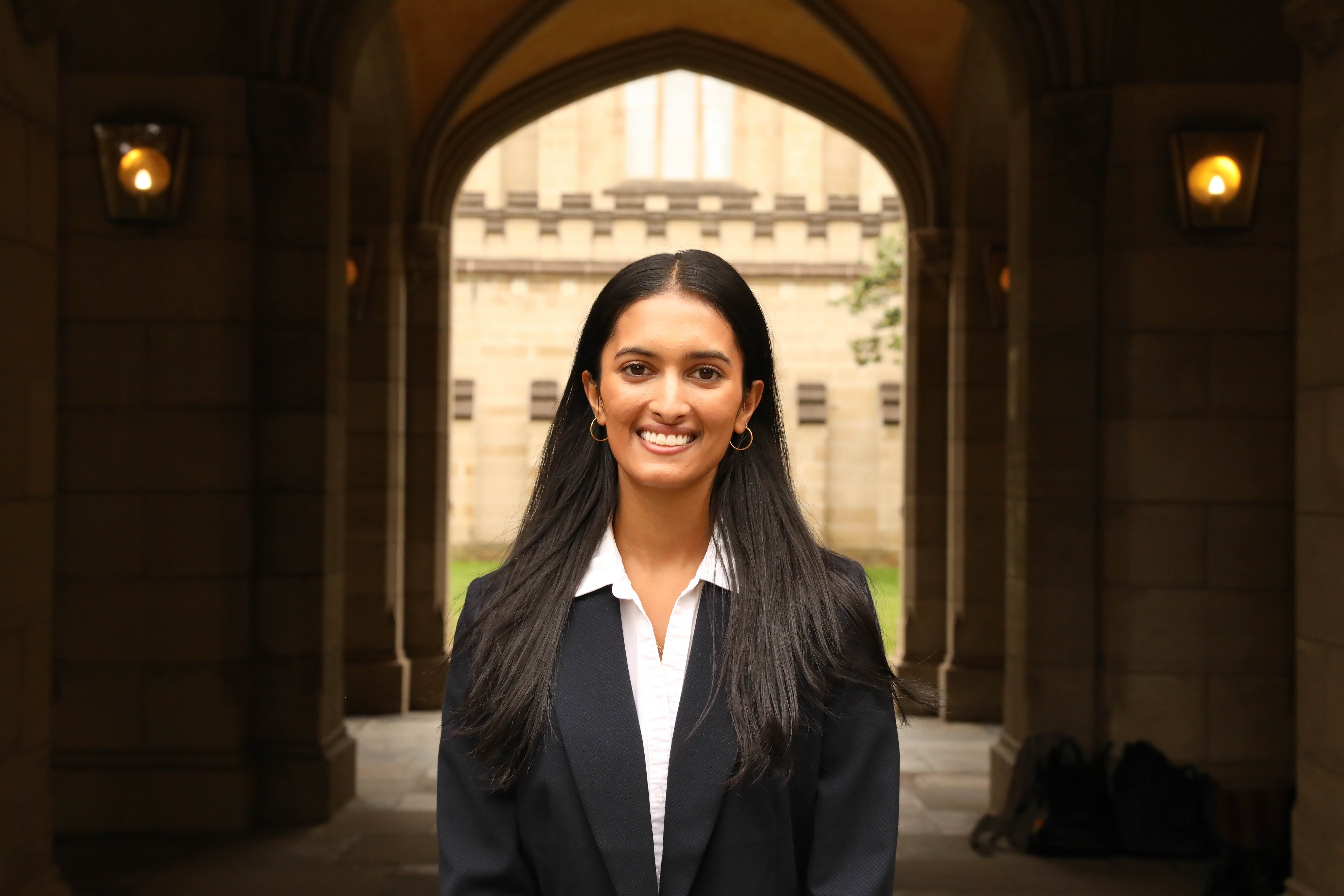
Hi everyone, my name is Poorva and I graduated from Mac.Rob in 2024, scoring a raw 46 in English Language 3/4. The following blog is about how to efficiently use the most important tool that all students have at their disposal - the VCAA past exams.I’ll be going through how I used the sections individually throughout the year and then all together at the end of the year during SWOTVAC, as well as how to navigate the answer guides.
VCAA has their past exams from the last 20 years up, I would say only the past 7-10 are 100% relevant… previous to that the texts are a little strange and the questions in the SAQ also use too much old VCE English Language Study Design language.
Throughout the year:
From Jan-August, I look at different sections depending on what type of SAC I have coming up - depending on what Area of Study (eg Formality vs Informality) it relates to and which of the 2 types of writing I’ll be completing (Short Answer Questions, Analytical Commentary or Essay).
For example, my first SAC was an Essay SAC about informal language. So I had a look at the prompts from the previous Study Design’s exams and made a list of all the relevant essay prompts. Even if I didn’t end up writing full essays for all of these, it would still be helpful to write plans of how I would approach such a question, and exposing myself to the different characteristics of each Essay question type.
Similarly, my second SAC was a formal language Analytical Commentary and Short Answer Question set. Some texts I looked at: 2018 Section B, 2023 Section A and 2022 Section B.
Always prioritise completing your school’s past SACs before turning to past exams for extra material. After all, your teacher is the one writing your SAC so you should learn to be familiar with their style of question writing and what they would like to see in your responses.
.jpg)
During exam period and SWOTVAC:
From September-October, my revision using the past exams was split into 4 main streams:
- Finishing off sections from recent VCAA exams I didn’t get to throughout the year
- This one is fairly straightforward, just making sure that no stone is left unturned since the recent VCAA exams are the best source of revision for the upcoming VCE English Language Exam. Obviously some sections didn’t align with what I was studying at the time based on the style of SAC I was going to have, so I skipped it initially.
- Redoing challenging exam sections that I’ve already completed throughout the year
- There are definitely some sections that are harder than others, and sometimes SAQ and AC in particular can be tricky depending on the quality of the text and the kind of questions that they ask you.
- Without looking at the solutions or my previous response, I launched straight into redoing the section to see how much I have learnt since I last wrote my response to the section. Hopefully there was marked improvement, but I would go back again for a 3rd time if I wasn’t satisfied with what I wrote. This ensures that I’m really gaining a deeper understanding of the texts I was looking at and also it’s a quantitative way to track my growth throughout the year.
- Doing older VCAA exams
- I didn’t go too far back - before 2010 the texts stray too far from the current VCE English Language Study Design and there is little marginal benefit from each extra paper that you do. For me 2010-2017 was the sweet spot, old enough to provide a new perspective but new enough that the texts weren’t repetitive or boring. Of course, if my tutor recommended any texts from the 2000s I would definitely go do them!
- Doing recent company exams
- The best companies I would recommend are Insight, NEAP, and VATE. The other companies are typically lower quality - with boring and shallow texts and unrealistic essay prompts. The way I approached doing full mocks is listed below.
I realised very quickly that I didn’t have the stamina to complete a full exam paper from the get go, finding myself reading very sloppy work when I went back to edit it. So I switched tactics - I split the exam up section by section and built up my endurance.
Firstly, I started just doing each section by itself (SAQ - 20-25 minutes, AC - 45-55 minutes, Essay - 50-55 minutes) and taking a break between each one, really making sure I was consistently within these time frames. Then, I grouped up two sections (SAQ+Essay - 70-80 mins, SAQ+AC - 65-70 mins), finally then sitting full 2 hour mocks.
Lastly, make sure that you are getting consistent feedback from your practice exams! There is no point writing and writing all for yourself not to know how to improve. Get help from your tutor, your school teacher, and even your peers! They can offer valuable insight that differs from yours - offering you a new perspective or approach to something.
If you're looking for structured support, Excel Education offers experienced tutors who can give you exactly this kind of targeted feedback.
If you’re using the marking guide, here’s how I did it:
- SAQ: this is the only section where I wouldn’t use up valuable time with the teacher/tutor. Use the marking guide to pinpoint any key features that you missed for the questions, and note how the responses used metalanguage to analyse quotes differently or better than you did. Give yourself an explicit score out of 15.
- AC: this is still doable with a marking guide albeit I wouldn’t adhere to it so rigidly. Use it as a method to determine if you picked up the best examples, and that the sociolinguistic variables that you identified were the same as the examiners’ train of thought as well.
- Essay: same goes as above - of course everyone’s essays will be super different since each student’s contemporary examples are different. Just make sure that the language features that you talked about in your essay are similar to what the exemplar had.
And that’s it - hopefully this comprehensive guide breaks down how to use past exams to improve your VCE English Language scores!
Subscribe to our Newsletter
Learn more about our programs
Interested in more?
Take a read through our most recently published blogs.
.jpg)
.jpg)
.jpg)
.jpg)